


ASEAN's interest in BRICS is a hedge against Trump
08/01/2025 96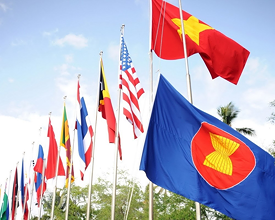
Most viewed articles


"Any system of world order, to be sustainable, must be accepted as just," argued Henry Kissinger in "World Order." International order, the legendary statesman argued, is ultimately built on the set of implicit norms as well as formal rules governing relations among states. Perhaps nothing better captures the fraying of the existing U.S.-led international order than the steady rise of BRICS.
What originated as a catchy term by Goldman Sachs economist Jim O'Neill to denote a motley crew of large emerging economies has now morphed into an increasingly potent geopolitical reality. Last year, the founding members of Brazil, Russia, India, China and South Africa decided to expand by including regional powers Egypt, Iran and the United Arab Emirates.
Indonesia's joining of the group was announced by Brazil on Monday. Other emerging powers such as Turkey, which possesses the second-largest armed forces in NATO, and Saudi Arabia, the world's largest oil exporter, have also expressed interest in joining the new power grouping. Crucially, Southeast Asia's largely nonaligned core members such as Malaysia, Thailand and Vietnam have also enthusiastically engaged the BRICS group.
On the surface, BRICS Plus doesn't have much to show despite its superlative rhetoric and grand gestures. It has no centralized bureaucracy, nor a joint military command. Its few economic initiatives are, at best, more aspirational than consequential. In fact, it's even less institutionalized than the notoriously ineffectual Non-Aligned Movement (NAM). Worse, odious leaders such as Russia's Vladimir Putin have leveraged BRICS members to break their own international isolation.
Nevertheless, BRICS is increasingly attractive to rising powers. Not only does it reflect the rapidly shifting balance of power at the global stage, but, crucially, also allows emerging nations to express their discontent with the U.S.-led international order as well as collectively shielding themselves from the potentially disruptive impact of a second Trump presidency.
Just weeks before re-entering the White House, President-elect Donald Trump openly warned BRICS nations from adopting any independent currency that could challenge the U.S. dollar's hegemony, saying, "We require a commitment from these countries that they will neither create a new BRICS currency nor back any other currency to replace the mighty U.S. dollar or they will face 100% tariffs and should expect to say goodbye to selling into the wonderful U.S. economy."
Trump's diatribe, however, was at once both premature and counterproductive. Key BRICS members such as India have made it clear that they have no interest in backing any major "de-dollarization" scheme. If anything, the power grouping has been increasingly divided between two camps, namely the Russia-China authoritarian axis and the India-Brazil-South Africa group of dynamic democracies. Last year, major rising powers such as Indonesia snubbed BRICS membership in order to avoid ensnarement into any China-led anti-Western camp.
Meanwhile, the U.S. dollar still remains the predominant currency of trade, responsible for as much as 90% of global foreign exchange transactions. Nevertheless, the BRICS Plus grouping has gained growing traction, especially among key ASEAN states.
To begin with, regional leaders such as Indonesian President Prabowo Subianto value the prestige of joining the ranks of a major non-Western power group. While maintaining the country's commitment to eventually join the rich club of democracies, namely the Organisation for Economic Co-operation and Development (OECD), Indonesian Foreign Minister Sugiono has argued that joining BRICS facilitates Indonesia's "free and active" foreign policy doctrine.
Famed for their "bamboo diplomacy," Vietnam and Thailand also see joining BRICS as a way to reduce their reliance on the West and enhance their room for strategic maneuvering. Membership in the power grouping could also facilitate favorable energy and food deals with resource-rich members such as Russia.
Beyond hedging, however, BRICS also serves as a platform to express discontent with the existing U.S.-led international order. Perhaps no Southeast Asian leader has been as vocal in his criticism of the West's supposed double standards and "Sinophobia" than Malaysian Prime Minister Anwar Ibrahim.
Throughout the past year, Anwar has consciously positioned himself as the voice of the broader Islamic world in criticizing the West's active support for Israel's war in Gaza. He has also accused the West of "China-phobia" while actively presenting Beijing as a Global South partner for development and peace.
As the rotational chair of ASEAN this year, Malaysia will play a prominent role in enhancing Southeast Asia's engagement with BRICS as a whole and, more specifically, with the axis powers of China, Russia and Iran.
BRICS also presents an opportunity for emerging nations to collectively shield themselves from the most disruptive aspects of a second Trump presidency. Though a "BRICS currency" is still a pipe dream, the reality is that key member states are already doubling down on bilateral currency swap deals. Heavily sanctioned by the West, Russia has de-dollarized over 90% of its trade with China and India, while rapidly integrating its financial system with Iran's, the other heavily sanctioned BRICS member.
De-dollarization also makes sense for key Southeast Asian nations, since Vietnam maintains robust defense and investment ties with Russia, while Malaysia has been a major conduit for Iran's oil exports to East Asia. Should the second Trump presidency press ahead with more punitive measures against both rivals and allies, whether in terms of economic sanctions or heightened tariffs, key Southeast Asian nations will likely double down on their partnership with BRICS to protect their interests.
Aside from "de-risking" from Trump's punitive measures, however, emerging nations will likely also explore ways to diversify their foreign currency reserves. After all, a second Trump administration is widely expected to engage in massive tax cuts and digital currency speculation, which could collectively undercut America's fiscal position and, by extension, the U.S. dollar's reliability as the global currency reserve.
Ultimately, BRICS' fate will likely be less shaped by its own achievements rather than by fears and anxieties over an even more disruptive and unilateralist Trump presidency in the years to come. And few regions are as keen as ASEAN to hedge their bets by cementing ties with new rising powers.
Source: Nikkei Asia
- US tariff threats over forced labour 'unjustified', Commission says
- US Section 301 Forced Labor Investigation: New Trade Compliance Risks for Viet Nam Exporters
- US cites forced labor concerns as grounds for new tariffs
- Aquatic products face challenge of maintaining market share in US
- Viet Nam extends anti-dumping duties on some Thai sugar products to 2031