


Most viewed articles


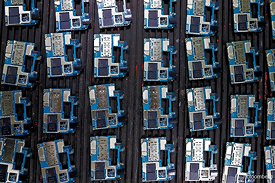
India has removed import duties on some components key to producing mobile phones, Finance Minister Nirmala Sitharaman announced in the annual budget on Saturday, in a boost for local production efforts and benefiting firms such as Apple and China's Xiaomi.
India's electronics production has more than doubled in the last six years to US$115 billion (RM512.58 billion) in 2024, with the country now becoming the world's second-largest mobile phone manufacturer.
Apple led the Indian smartphone market with a 23% share in total revenue during 2024, followed by Samsung at 22%, according to research firm Counterpoint.
The list included components for mobile phone assembly such as printed circuit board assembly, parts of camera modules, and USB cables, which were taxed at 2.5% earlier.
The cuts will help India better cope with a potentially disruptive year of global trade due to US President Donald Trump's tariff threats.
As Trump hopes for his "America First" policies to lure more manufacturing units back into the US, India is seeking to take advantage of US-China trade tensions to increase its own share of global supply chains.
Internally, India's Information Technology Ministry had warned it risks losing out to China and Vietnam in the smartphone exports race if it were to not lower tariffs to lure global companies, Reuters reported last year.
Sitharaman, in her budget last year, had announced a review of the nation's customs duty rate structure to rationalise and simplify tariffs for ease of trade.
The duty review also aimed at removing the so-called inverted duty structures or instances where tariffs on raw materials or intermediate goods are higher than the final products they are used to produce.
India's complicated tariff structure was often cited as a deterrent for efficient local production and a cause of disputes.
Source: The Edge Malaysia
- US tariff threats over forced labour 'unjustified', Commission says
- US Section 301 Forced Labor Investigation: New Trade Compliance Risks for Viet Nam Exporters
- US cites forced labor concerns as grounds for new tariffs
- Aquatic products face challenge of maintaining market share in US
- Viet Nam extends anti-dumping duties on some Thai sugar products to 2031