

Why Angry Europeans Won’t Isolate Trump at G-7 Summit
07/06/2018 63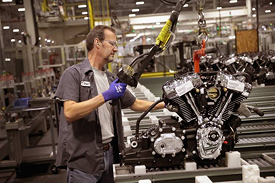
Most viewed articles


The EU hopes that responding to Washington’s tariffs with similar moves will force the U.S. to think again
European leaders will need to exercise heroic self-restraint to resist the temptation to turn this week’s Group of Seven summit in Canada into the G-6 plus one.
President Donald Trump’s decision to impose tariffs on European Union steel and aluminum imports in the name of national security is regarded as deeply insulting by countries that consider themselves the U.S.’s closest allies.
With this dispute coming so soon after trans-Atlantic rifts over the Paris climate accords and the Iran nuclear deal—and despite an EU offer of wider trade talks in return for a permanent exemption from the tariffs—European leaders are furious with Mr. Trump.
But they also consider it a fundamental European interest to have a functioning G-7 that can present a united Western front in response to wider challenges from Russia and China. So while there is likely to be plenty of plain-speaking in Quebec, there will be no attempt to isolate Mr. Trump.
Nonetheless, Mr. Trump has crossed a Rubicon with his tariff decision. EU leaders will continue to press Mr. Trump for a permanent exemption, but nobody seriously expects him to change his mind now. The EU’s own offer of a wider trade negotiation is now off the table and unlikely to be revived, say EU officials. France’s reluctance to make any offer to Mr. Trump with a gun to the EU’s head and opposition to any new trade negotiation that includes agriculture or industrial tariffs has only hardened now that the EU has been rebuffed.
Instead, EU negotiators accept that political and diplomatic efforts to resolve the situation have now been exhausted. The focus now switches to a two-pronged response based on retaliatory tariffs and legal action. But this takes the dispute deep into uncharted waters.
The EU’s first hope is that retaliatory measures will force the U.S. to think again. True, the EU’s package of tariffs—which was approved by the EU College of Commissioners on Wednesday—is small at €6.4 billion, calibrated to balance the similar expected cost of U.S. tariffs on EU steel and aluminum exporters. That is equivalent to 0.1% of U.S. world-wide exports, and only €2.8 billion of these will be implemented in the first phase at the end of June.
But the 102 goods affected, ranging from bourbon whiskey to Levi’s jeans to Harley-Davidson motorcycles, have been carefully selected to ensure the pain is concentrated in states represented by prominent Republicans.
At the same time, nine other countries have also notified the World Trade Organization of their intention to introduce countermeasures against the U.S., including $12.8 billion of tariffs by Canada, $2.8 billion by Mexico and $3 billion by China. The U.S. has already lost $2 billion of pork exports to China as a result of new tariffs. The hope is that domestic opposition may yet force Mr. Trump to change his approach to trade.
If this approach fails, the EU is counting on the WTO to rule that Mr. Trump’s tariffs are illegal on the basis that his national security claims are bogus.
European officials are confident that they have a strong case. But trade experts aren’t so sure: there is no precedent for the WTO adjudicating on a dispute involving Article 21 of the WTO agreement, which permits countries to breach their WTO commitments for national security reasons.
The only other time such a case has been launched was when the U.S. attempted to extend its sanctions against Cuba extraterritorially to the EU in the early 1990s. But that was resolved politically before the WTO panel ruled.
The reality is that trade lawyers will be deeply uncomfortable at being asked to rule on what constitutes a risk to America’s national security. If a dispute panel rules against the U.S., it would be politically explosive and could threaten the survival of the WTO; but if it ruled in America’s favor, it would have created a giant loophole in WTO rules for others to exploit.
Indeed, two other Article 21 cases are currently before the WTO, one involving Russia and Ukraine and the other putting Qatar against the United Arab Emirates and Saudi Arabia, so the risk is real.
Of course, what the EU fears most is that Mr. Trump retaliates with further measures of his own, raising the prospect of an all-out trade war. The U.S. administration’s announcement that it is considering a 25% tariff on imported cars citing similar national security looks like a clear threat to do just that. That would hit the European economy hard: EU car exports to the U.S. are worth five times as much as its steel and aluminum exports.
The EU is determined to avoid any escalation: the remaining €3.8 billion of its countermeasures will only be adopted in three years or after a WTO ruling. It hopes that the time it will take for the U.S. to complete its investigation into car imports can be used for further dialogue.
But this assumes that Mr. Trump’s concern is purely with trade. What some Europeans are starting so wonder is whether Mr. Trump’s true agenda is much more threatening. If his real goal was to divide France and Germany, break apart the EU and destroy the global multilateral rules-based system, then imposing tariffs on cars would be a very good way to go about it.
Source: The Wall Street Journal
- Trump says Viet Nam to face 20% tariff under 'great' deal
- US Forced Labour Hearings: Trump's next tariff threat looms over 60 countries, including India
- Viet Nam, France advance implementation of Comprehensive Strategic Partnership
- Business community key to Viet Nam's Net Zero journey: Deputy Prime Minister
- New push to stabilise Viet Nam property market