

Most viewed articles


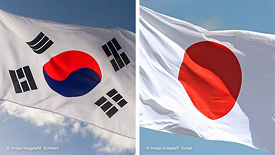
Trade minister Hiroshige Seko said Tuesday Japan will go through with plans to revoke South Korea's status as a trusted trade partner, a move certain to deepen the rift between the feuding neighbors.
"We will carry out (the plan)," Seko told a press conference, brushing aside criticism that the move is intended to strike a blow on the South Korean economy.
"This is a domestic decision aimed at implementing the appropriate export controls. It's not meant to impact relations between Japan and South Korea," he added.
Japan will remove South Korea from a "white list" of 27 countries that enjoy minimum trade restrictions on sensitive goods including electronic components. Unlisted countries must receive case-by-case approval from the Ministry of Economy, Trade and Industry before such goods can be exported.
The measure is set to take effect at midnight Tuesday having already been approved by the cabinet of Prime Minister Shinzo Abe.
Seoul has reacted strongly, saying last week it will terminate a military intelligence-sharing pact with Tokyo that helps the U.S. allies counter missile threats from North Korea.
South Korean Prime Minister Lee Nak Yeon said Monday the decision to pull out of the General Security of Military Information Agreement, or GSOMIA, could be reconsidered if Tokyo cancels its trade measures, an olive branch Seko rejected.
Trade controls as an issue are in a "completely different dimension" from military intelligence, Seko said, adding that he "can't at all understand why South Korea would connect the two."
Tokyo has already implemented tighter controls on exports of some materials needed by South Korean manufacturers of semiconductors and display panels including Samsung Electronics Co. and SK Hynix Inc.
Seoul views the move as retaliation for South Korean court decisions last year ordering reparations be paid to people claiming to have been forced to work in Japanese factories during Japan's colonial rule of the Korean Peninsula from 1910 to 1945.
Japan maintains that the issue of compensation was settled "finally and completely" by a 1965 bilateral agreement under which it provided South Korea with $500 million in financial aid.
Source: Japan Today