


USMCA trade deal approval encourages area farmers
08/02/2020 86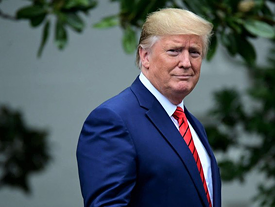
Most viewed articles


President Trump's signature on Jan. 29 to the United States-Mexico-Canada Agreement marked the latest chapter for international trade after he signed the Phase One trade agreement with China and an agreement with Japan, bringing increased optimism among farmers for strengthened trade and a gradual uptick in commodity markets such as corn and soybeans.
The Phase One agreement signed by Trump on Jan. 15 called for China to purchase $40 billion in U.S. agricultural exports over the next two years. This agreement is regarded as a contract, but the USMCA required Congressional approval — it gained strong bipartisan support with a 385-41 vote in the House and an 89-10 vote in the Senate before heading to Trump's desk. Local farmers have witnessed sluggish market performance for commodities since trade disputes began in 2018 between the U.S. and China, but they are looking forward to the prospect of fairer international trade after the approval of the two agreements.
The revised trade plan with Canada and Mexico replaces 1994's North American Free Trade Agreement, including provisions that would specifically help dairy farmers — opening the Canadian market to U.S. dairy, poultry and eggs, while the U.S. will purchase more Canadian dairy and peanut products along with a limited amount of sugar. Canada and Mexico are the two biggest export markets for the U.S. agriculture industry.
Kenny Lovelace, who raises cattle and grows corn north of Palmyra with his wife, Janet, said the U.S. had paid tariffs for years before negotiations began with China, and he expected the phase one agreement results to benefit trade across many industries in both nations. U.S. farmers received federal compensation for lost soybean sales after China placed tariffs its largest agricultural import from the U.S. and even greater tariffs on pork in 2018. Lovelace stressed the agreement between the nations isn't yet complete — Trump has vowed to work on phase two of the plan — “it's very time-consuming and it does get into everybody's pocket for a while,” Lovelace said.
Lovelace said it will take time for market prices to reflect the new trade agreements, and the plans themselves will be adjusted as trade factors change. U.S. Pork demand is very high in China after the African swine fever killed millions of pigs. However, the spreading coronavirus has closed China's markets, affecting trade and market outlooks. But Lovelace said Japan shares China's high demand for U.S. beef, and the nation is in the midst of strong industrial growth — along with potential U.S. trade partners like India — similar to what the U.S. experienced during the Industrial Revolution. The U.S. has varied interests today, and those nations are emulating American consumption by purchasing more vehicles and embracing domestic staples like Coca-Cola and McDonald's hamburgers.
“As far as Japan, Canada and Mexico, I think it's going to make a tremendous difference,” Lovelace said. “Just like Japan, they've been wanting good beef, and it's been showing up a little bit.”
Missouri Farm Bureau President Blake Hurst commended the bipartisan approval of the USMCA, stressing the future more international markets for U.S. agricultural exports could open up in the future.
“Finishing the USMCA is a good sign for the future of U.S. agriculture. While the agreement itself is important, it also shows that Republicans and Democrats can still work together to get things done and open new markets for our products,” Hurst said. “We're excited about the prospects of future trade deals with the United Kingdom, the European Union and perhaps even India. Missouri farmers have plenty to sell, and we welcome the opportunity to find new buyers.”
Source: Hannibal
- Viet Nam, EFTA finalize negotiations on free trade deal
- Germany's energy-hungry small firms struggle with green shift
- Green foreign investment must be integrated into Europe’s clean industrial policy
- Türkiye leads global EU summit on clean industry cooperation to drive decarbonization
- Top leader orders removing bottlenecks to achieve GDP growth at least 10%