

Most viewed articles


Norway and China FTA talks anticipate post-Covid economic recovery
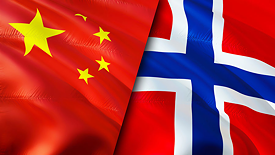
Norway and China held a video conference on March 11, 2021, between their chief trade negotiators, with a view to concluding a free trade agreement (FTA) in the near future. The negotiating parties conducted in-depth consultations on trade in goods and services, investment protections, rules of origin, customs procedures and trade facilitation, sanitary and phyto-sanitary measures, technical barriers to trade, dispute settlement, and the preamble to the agreement. Both sides stated that the discussions were held on the basis of achieving a common consensus on as wide a range of economic issues as possible.
Both countries also reiterated that their negotiations for a free trade agreement were important in jointly combating the global coronavirus pandemic and restoring growth in a post-pandemic world. In achieving this outcome, they placed importance in supporting free trade and multilateralism, strengthening bilateral economic and trade cooperation, and maintaining the stability of global industrial supply chains. Additionally, Norway expressed its interests in expanding cooperation with China on boosting cross border flows of direct investment, including into key energy sectors such as hydropower and offshore oil and gas development.
New food agreements post-deep freeze in relations
The Norwegian government had earlier signed an agreement with China to enable the importation of salmon and other seafood, including fish oil and fish meat, into the country’s growing market for northern European food products, where the yearly increase in seafood consumption, alone, exceeds Norway’s entire annual production in this sector. This market access accord for Norway’s seafood products is typically renewed on a two year basis and should enable a more stable platform for Norwegian salmon and fisheries until a more comprehensive FTA is finally concluded.
The increasingly constructive bilateral economic ties, over the last four years, arise after an extended period of frozen diplomatic relations, from 2010 to 2016. This involved no political contact between the two powers following Norway’s Oslo-based Nobel Committee awarding the Peace Prize to China’s Liu Xiaobo, in 2010, after Liu was convicted of sedition in attempting to overthrow the Chinese government. The normalizing of economic and political relations, since that time, could be interpreted as sign of how any European country’s ties with China can resume on a more constructive track following several years of frozen normalised relations driven by political differences.
Norway’s expanding ties with ASEAN states through EFTA
Norway has also been formalizing its economic and trade relations with other major Asian economies through its membership of the European Free Trade Association (EFTA) which also includes Iceland, Liechtenstein and Switzerland. For instance, at the end of 2018, EFTA had signed a Comprehensive Economic Partnership Agreement (CEPA) with Indonesia. The Southeast Asian state is the largest economy in the 10-member grouping of nations, known as the Association of South East Asian Nations (ASEAN), a bloc which is expected to become the fourth largest economic region in the world, by 2030, according to some European governments’ forecasts, while Indonesia is anticipated to reach that level, as a sole economy, by 2050, according to estimates by international consultancy, PwC.
Under the terms of the agreement, which is expected to be ratified in the near future, Norway will be in a preferential position to obtain access for some of its major exports to Indonesia including marine and fish produce, but also agricultural products such as cheese chocolates and coffee. Other major sectors to benefit from greater market access include industrial products such as machinery, chemicals and pharmaceuticals, in addition to luxury manufactured goods such as watches. CEPA also promises to boost services trade including for telecommunications, financial services and energy.
Significantly, the agreement contains chapters on sustainable development including provisions on environment covering forest resources and managed plantation development, as well as on workers’ rights.
Europe-China trade and investment deals state of play
China’s FTA negotiations with Norway align with Beijing’s plans to expand its free trade and investment treaty networks across Europe. To that extent, China has already concluded trade agreements with Switzerland and Iceland. It completed a detailed and comprehensive FTA with Georgia in 2017, which was ratified on 1st January, 2018, touted by China as the first bilateral trade agreement concluded with a “Eurasian” economy. From a European perspective, Georgia also has an economic association agreement with the EU, which includes a preferential trade regime for the purposes of facilitating market access between the two based on an alignment of their domestic regulations.
Aside from China’s FTA negotiations with Norway, the Chinese government is also in talks over an FTA with Moldova, while exploring a joint feasibility study in upgrading its FTA with Switzerland. At end-December 2020, China and the European Union signed an in-principle Comprehensive Agreement on Investment treaty (CAI), following seven years of negotiations. Currently the CAI, while not a free trade agreement, and focusing on providing greater protection for bilateral investments between the EU and China, is being scrutinized by EU institutions, including the European Parliament and member states before being ratified.
From an economic perspective, the CAI does not provide a substantially closer investment partnership between the EU and China, other than consolidating China’s and individual EU member states’ existing bilateral investment agreements and each party’s respective commitments under the World Trade Organisation (WTO). It does however seek to address EU Member States’ concerns on sustainable economic development and further requires that China complies with International Labour Organisation (ILO) Conventions.
Although the CAI seemingly gives rise to issues surrounding the EU’s “strategic autonomy”, supposedly enabling greater policy independence from the US, it is also unlikely to precipitate a major policy shift towards China. Rather, the CAI is anticipated to operate in parallel with recent EU regulations on more robust inward investment screening and in establishing a new regime for incorporating sanctions to be imposed in relation to breaches of human rights.
As for the UK, given its actual departure from the EU at end of last year, it is the only major European economy which has neither concluded nor is in talks with China on an FTA or a new investment treaty. It only retains a relatively outdated bilateral investment treaty dating back to 1986.
Source: China Briefing
- Intensifying enforcement of the Viet Nam - Israel Free Trade Agreement
- High-tech manufacturing creates key driver of Viet Nam's growth
- EU car industry clashes over strategy to fight Chinese competitors
- Asia-Pacific renewable investment outpaces procurement efficiency
- New carbon market boosts pioneering steel firms