


Soon end the sharp decline in Vietnam’s rice export prices
13/09/2023 125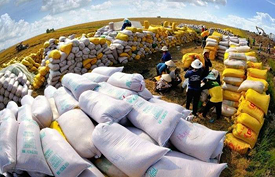
Most viewed articles


Data from the Vietnam Food Association (VFA) shows that in the past two weeks, export rice prices have continuously decreased sharply. Vietnam’s 5% broken rice is currently down 15 USD/ton compared to session 5.9 to 628 USD; 25% broken rice also decreased by 15 USD to 613 USD/ton. These are the two strongest consecutive declines since India banned rice exports.
Explaining the reason for the deep price drop, a representative of the Vietnam Commodity Exchange (MXV) said that the Philippines, Vietnam’s largest rice consumer, officially imposed a price ceiling on imported rice, causing great pressure. increase the price of our country’s rice exports.
According to data from Vietnam Customs, in the first 8 months of this year, the country exported 2.34 million tons of rice to the Philippines, accounting for more than 40% of Vietnam’s total rice exports.
Recently, the Philippine Ministry of Finance continued to recommend measures to curb rising retail prices of rice, including tax cuts on imported rice. Specifically, the rice import tax rate is proposed to be reduced from 35% to about 0-10%.
“The country’s presidential office estimates that rice prices will stabilize when farmers begin harvesting the main crop this September and October. About 5 million tons of rice will be harvested, allowing the Philippines to reach its target of 20 million tons. this year”, MXV cited data from the Philippine Department of Agriculture.
However, according to MXV, it is likely that the decline in rice prices will soon be restrained, and will reverse and increase again amid concerns that global supply cannot be eased soon.
According to MXV, the Indonesian National Food Agency estimates that drought in many main production areas is currently exacerbated by the El Nino weather phenomenon, which could reduce rice production by 5-7% this year compared to with 31.54 million tons last year.
Indonesia has authorized 2.3 million tons of rice imports in 2023 to alleviate the impact of El Nino, but 453,000 tons remain uncontracted.
The government is negotiating with Asian countries including Cambodia, China and Bangladesh to seek a contingency agreement for future import needs. Previously, Indonesia often imported from major partners Thailand, Vietnam and India.
On the other hand, in China, a recent flood damaged corn and rice fields in the key production area in the north of the country, raising concerns about food inflation as the world is facing with tight supply.
According to the Food and Agriculture Organization of the United Nations (FAO), the world food price index in August fell to its lowest level in 2 years.
In contrast, the rice index increased nearly 10% compared to July because India’s decision to ban Indica white rice exports in July disrupted trade at a time of scarce supply before the new crop harvest.
Source: Vietnam Posts English
- China retaliates against US blacklist, targets defence and rare earth firms with export controls
- Rising global shipping costs put pressure on Viet Nam’s seafood exporters
- Customs force tightens crackdown on intellectual property-infringing goods
- Continued resilience of Viet Nam's economy
- Viet Nam’s trade deficit raises structural concerns: opinion