


Chinese investment capital poured heavily into Vietnam
17/08/2024 898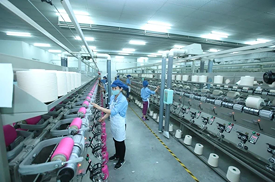
Most viewed articles


In terms of investment capital, Singapore still holds the throne, but in terms of number of new investment projects, China is the leading investor. Chinese foreign investment (FDI) is still accelerating into Vietnam.
China leads the number of new FDI investment projects
On the afternoon of August 13.8, the Hai Phong Economic Zone Management Board received and worked with a Chinese business delegation. Mr. Si Zhong Wu, Director of Goldwind International Southeast Asia, representing businesses in the supply chain producing components for wind power turbines in China, said Goldwind is among the top 3 wind turbine manufacturers in the world, supplying supplying more than 47.000 wind turbines with a total global installed capacity exceeding 97 GW. On this occasion, the delegation wants to survey and select an investment location to build a high-tech wind power turbine assembly and component manufacturing factory in the Lach Huyen non-tariff, logistics and industrial zone (Hai Phong).
One week earlier, at the Hai Phong Investment Promotion Conference, held in Shenzhen City (China), Hai Phong City leaders awarded 1 new registration certificates and expanded investment to Chinese investors with a total capital of nearly 7 million USD. The fields where Chinese enterprises expanded their investment on this occasion were mainly in the production of solar panels, electronic components, auto parts processing... Also at this event, the Hai Phong Economic Zone Management Board also Signed 200 memorandums of understanding with major Chinese investors.
If in the past, China was only Vietnam's top trading partner, in the past 5 years, China has always been in the top 5 countries with the largest amount of investment in Vietnam. Data from the Foreign Investment Agency (Ministry of Planning and Investment) shows that in the first 7 months of this year, Singapore led with a total FDI capital in Vietnam of nearly 6,52 billion USD, accounting for nearly 36,2% of total investment capital. , increased more than 79% over the same period; Hong Kong ranked second with more than 2 billion USD, accounting for 2,19% of total investment capital, more than twice the same period. Next is Japan, China... However, China leads in the number of new investment projects (accounting for nearly 12,2%), increasing 2 times and becoming the 30th largest investor out of 7 investment partners. VN.
Minister of Planning and Investment Nguyen Chi Dung commented: The most noticeable positive thing is that FDI capital from China has the appearance of many international-scale corporations in the fields of technology, electricity and electronics. , processing, manufacturing, infrastructure, renewable energy, electric vehicles...
Observational reality shows that, in the past, Chinese FDI capital into Vietnam often focused on manufacturing and processing household wooden furniture, iron and steel, leather shoes, garments, food processing, and plastic packaging. ... in recent years, Chinese capital has shifted to high-tech industries, components and spare parts for industrial production, electronics, automobiles, and green energy. Recently, Beijing BOE Group invested in a smart terminal factory in Phu My 3 Industrial Park (Ba Ria-Vung Tau) with a total capital of 277,5 million USD, specializing in assembling and manufacturing screens for computers. computers, televisions, circuit boards..., expected to operate in 2026. In 2019, BOE Beijing also put a factory in Dong Nai into operation.
To date, many projects worth hundreds of millions of dollars, even up to billions of dollars from China such as Goertek, BYD, Radian, Brotex, Wingtech, Deli, Trina Solar... have been present in Vietnam. The most recent is a joint venture project with Geleximco Group, producing Omoda and Jaecoo electric vehicles (part of the Chinese Chery Group) worth more than 800 million USD.
Market of billion USD agricultural products
Besides increasing investment capital, in terms of trade, China is currently the largest market for Vietnamese agricultural products. According to data from the General Department of Customs, in 2018, the total bilateral trade turnover between Vietnam and China exceeded the 100 billion USD mark for the first time. By 2023, this number will increase to 171,2 billion USD, accounting for more than 25% of the country's total import-export turnover.
In particular, thanks to this huge market, 12 groups of Vietnamese agricultural products have become industries worth billions of dollars. Specifically, for fruit and vegetable products, exports to China account for 53,7% of goods exported abroad; Lychee exports account for 90%; dragon fruit accounts for more than 80%; rubber 71% and China is currently the third market of Vietnamese seafood. According to the General Department of Customs, a number of Vietnamese agricultural products exported to China have grown dramatically in the past year, notably durian reaching more than 3 billion USD, an increase of 2,2 times compared to the previous year.
Mr. Dang Phuc Nguyen, General Secretary of the Vietnam Fruit and Vegetable Association, assessed: In addition to markets with high consumer demand, goods to China have many advantages due to cheap logistics costs and fast delivery times. In particular, Chinese consumers prefer many types of Vietnamese fruits. For many years, fruit products officially exported to China have always achieved much higher turnover than other fruits. 11 types of Vietnamese fruits are currently exported officially to China, including mango, dragon fruit, banana, longan, lychee, watermelon, rambutan, jackfruit, mangosteen, passion fruit and durian, which are among the top varieties. export turnover.
Professor and Doctor of Science Nguyen Mai, Chairman of the Association of Foreign Investors, commented that the trade relations between Vietnam and China are mutually complementary in the structure of import and export of goods. For example, Vietnam exports to China phones, electronic components, coffee, rubber, agricultural and aquatic products...; In the opposite direction, China exports many machinery, raw materials, construction supplies, shoes, fabrics... to Vietnam.
Regarding investment, according to Professor Nguyen Mai, Chinese FDI capital pouring into Vietnam is increasing because of the advantages from the domestic market with this country. China is still facing difficulties due to trade competition with the US. China's exports to the US and European markets have decreased significantly during and after the pandemic, especially in the high-tech sector. Meanwhile, Vietnam is located right next door, has very good economic and trade relationships with the world, and preferential tariffs through multilateral and bilateral free trade agreements that Vietnam has signed are a great advantage. to export goods.
Therefore, investing in Vietnam is looking for opportunities to link production, thereby creating a closed supply chain in production and business in this market. Chinese enterprises are very good at catching global economic trends and meeting market needs. Vietnam's convenient geographical location, relatively cheap labor costs compared to the country, low land rental costs, tax incentives... will be attractive factors for investors in this country. Vietnam benefits from having raw materials invested in local production and export to enjoy added value from here. Those are the attractions of Vietnam to Chinese investors.
In the old thinking, we often perceive goods from China as being of poor quality. But with modern technology, even world-leading technology, China is a quality investor. In the past few years, capital flows in the fields of high technology, future technology, AI..., fields that we really need, China is also very strong. More importantly, we have the right to choose the best investor for ourselves.
Source: Vietnam.vn
- Wood exports maintain growth, but industry still faces dual pressure
- Workshop discusses support for businesses through better use of RCEP
- VCCI works with NA committee to remove difficulties for private sector
- Some 778 Vietnamese seafood enterprises licensed to export to Taiwan (China)
- Local authorities to directly issue fragrant rice export certificates from July 2026