

Most viewed articles


Although export turnover in 2025 recorded positive figures, experts warn that if Vietnamese businesses do not soon adapt to strict sustainability standards from the EU and the US and remove logistics bottlenecks, they risk missing out on the new "take-off" phase.
Exports have made a spectacular breakthrough.
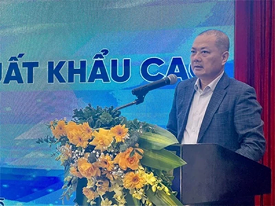
At the seminar "Solutions for High and Sustainable Export Growth" organized by the Import-Export Department ( Ministry of Industry and Trade ) on the morning of December 16th in Hanoi, Mr. Nguyen Anh Son - Director of the Import-Export Department (Ministry of Industry and Trade) affirmed that the period 2020 - 2025 marks a strong breakthrough in import-export activities, becoming an important pillar of the economy.
While the total value of imports and exports in 1995 was only about 500 million USD, by 2025 this figure is expected to increase to over 900 billion USD, approximately 180 times higher. In the first 11 months of 2025 alone, exports are projected to reach over 430 billion USD, an increase of more than 16% compared to the same period. For the whole year of 2025, exports are expected to exceed 470 billion USD, bringing the total import and export value to 920-925 billion USD.
"With these results, Viet Nam is expected to rank 10th among the world's leading trading nations. We have also maintained a continuous trade surplus for 10 years since 2016, making a significant contribution to macroeconomic stability," Mr. Son emphasized.
However, alongside the impressive figures, the leaders of the Import-Export Department also frankly acknowledged internal bottlenecks. Export growth still heavily depends on FDI, while domestic businesses have not yet deeply participated in the global value chain. Design and branding capabilities remain weak. Many industries still depend on imported raw materials, making them vulnerable to supply chain disruptions.
Pressure from the "green fence"
Amidst a volatile global economy, Dr. Nguyen Thi Thu Trang, an expert in international economic integration and law, and former Director of the WTO and Integration Center (VCCI), warns of a "wave" of sustainability standards becoming mandatory requirements in major markets such as the EU, the US, and Japan.
According to Ms. Trang, these standards are not limited to environmental factors like the EU's Green Deal, but also encompass human rights, the circular economy, social responsibility, and animal welfare. These requirements are delving into TBT (technical barriers to trade) and SPS (sanitary and phytosanitary) measures.
"Many businesses are exporting very successfully, but if we don't update our practices, there will come a day when we can no longer meet the requirements because these criteria are gradually being raised," Ms. Trang warned.
Experts recommend that businesses proactively seek information to comply with mandatory standards. For standards with a roadmap, appropriate steps should be prepared, avoiding "moving too quickly when not yet strong enough, but also not moving too slowly and missing opportunities." At the same time, Ms. Trang suggested that industry associations should establish "green hubs" to provide specific information to businesses.
Besides the challenges of green standards, the expansion of consumption channels through cross-border e-commerce is opening up new opportunities. Mr. Tran Van Trong, General Secretary of the Viet Nam E-commerce Association (VECOM), believes that 2025 is a "pivotal year" and predicts that 2026 will be the "take-off" period for this sector.
Despite the significant potential, Mr. Trong pointed out four main barriers that hinder Vietnamese businesses from expanding globally through digital channels: capabilities, legal framework, costs, and knowledge.
To facilitate this flow, the General Secretary of VECOM proposed that the Government promptly issue a Decree on customs management for goods imported and exported via e-commerce. At the same time, it is necessary to quickly implement Decision 2229/QD-TTg on building logistics infrastructure to serve online exports and strengthen coordination among units under the Ministry of Industry and Trade to support businesses.
Find new drivers of growth.
The strategy for import and export of goods until 2030, approved by the Prime Minister in Decision No. 493/QD-TTg dated April 19, 2022, sets the goal of sustainable export development with many specific solutions and tasks. In the following years, the Party and the State set a target of 6-7% export growth, but in reality, the growth rate has consistently reached double digits for many years.
According to the Trade Promotion Agency, as one of the driving forces contributing to economic growth in recent times, exports need feasible solutions to maintain high and sustainable growth in the future.
To realize the double-digit economic growth target set by the Party and the State, Mr. Tran Thanh Hai, Deputy Director of the Import-Export Department, believes that a strong shift is needed from extensive to intensive growth. Mr. Hai proposed four key groups of solutions.
Firstly, in terms of production, we need to develop foundational industries and sustainable agricultural products; and master technology and raw materials.
Secondly, continue negotiating new FTAs, diversify markets, and promote cross-border e-commerce.
Thirdly, in trade promotion, it is necessary to innovate methods associated with brand building, traceability, and digitalization.
Fourth, regarding logistics, it is necessary to optimize processes to reduce costs and encourage Vietnamese logistics businesses to expand internationally.
In the coming period, Viet Nam's exports need not only to increase in volume but also to enhance added value, technological content, and the self-reliance of the economy for truly sustainable development.
Source: Vietnam Business Magazine
- USTR Makes Findings and Proposes Action in 60 Section 301 Investigations Relating to Failures to Take Action on Trade in Forced Labor Goods
- [VCCI] The US officially initiates a Section 301 Investigation into Vietnam on Intellectual property
- General Secretary and President To Lam's working visit to three ASEAN countries: Demonstrating the stature of proactive and constructive diplomacy.
- Viet Nam accelerates innovation drive as skilled workforce becomes key to science and technology growth
- The US is increasing controls on AI chip exports