


Most viewed articles


Many agricultural products are of sufficient quality to join the global supply chain, but they fail to pass the first hurdle when entering foreign markets: packaging and English-language information.
According to Mr. Nguyen Ba Hai, Deputy Director of the Center for Trade Promotion and Investment Support (Trade Promotion Department, Ministry of Industry and Trade ), this is a common and recurring barrier in many localities and product groups.
Specifically, the majority of agricultural producers, including those producing OCOP products, still approach exporting as a "supplementary sales" activity, and do not yet consider packaging and language as mandatory conditions for participating in the international market.
The packaging does not meet commercial standards.
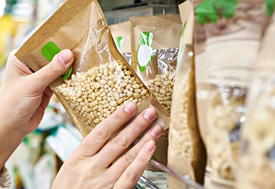
Packaging is the first point of contact between a product and its importer. However, in reality, many products still use packaging designed for the domestic market: lacking information, with a cluttered layout, and not conforming to the standards of the target market.
According to the Trade Promotion Agency, common errors include: missing required ingredients; inconsistent labeling between batches; failure to clearly indicate the origin of ingredients; incorrect expiration date and storage information; and packaging design that does not take international shipping into account. These errors cause products to be rejected at the initial stage of contact with partners, even before testing or price negotiations.
For food products, the requirements are even stricter. The US market demands labeling according to FDA standards; the EU requires export codes and traceability; and Japan has its own regulations regarding supplementary labels. "Just one small mistake can result in the shipment being returned or not cleared through customs," Mr. Hai said.
Notably, many OCOP (One Commune One Product) entities, agricultural producers and businesses, still view packaging as an additional cost, something to be done after an order has been secured. This approach is unsuitable for export, as partners typically evaluate products based on documentation, design, and information before discussing a purchase.
Along with packaging, language is the second biggest bottleneck when bringing Vietnamese agricultural products to the "global market". The majority of products only have information in Vietnamese, or a rudimentary English translation that doesn't accurately reflect commercial and technical terminology.
According to Mr. Nguyen Ba Hai, the lack of English-language information not only creates difficulties for end consumers but also leaves importers without enough data to assess risks. "They need to know the ingredients, processes, certifications, storage conditions, and legal responsibilities. If the information is unclear, they won't proceed," he explained.
In reality, at international trade fairs, many Vietnamese agricultural product booths have good products but lack catalogs, company profiles, or introductory materials in English. This significantly reduces the ability to connect with potential markets, even if market demand exists.
Unlike the domestic market, where sellers can explain directly, exporting requires information to "speak for itself" through labels and accompanying documentation. This is a systemic requirement that cannot be overcome by individual efforts on-site.
Difficult to access the official distribution channel.
Poor packaging and weak English language skills have a clear consequence: the product has difficulty entering official distribution channels. Even in smaller, more accepting markets, importers still require standardized information to ensure compliance with local laws.
According to the Ministry of Industry and Trade, many Vietnamese agricultural products are only sold through small retail channels, community stores, or directly to tourists , and have not yet entered a controlled distribution system. The reason lies not only in production volume but also in the failure to fully meet basic trade standards.
Meanwhile, importing markets are increasingly tightening transparency requirements, especially for food and agricultural products. Traceability, nutritional information, allergy warnings, and environmental responsibility are increasingly required to be clearly displayed on packaging.
Trade promotion agencies recommend a practical approach: standardize from the small details before expanding into new markets. Instead of spreading across many markets, businesses should choose a target market, carefully research labeling and language requirements, and then refine packaging to meet those standards.
According to Mr. Hai, this can be done in stages: reviewing mandatory information; hiring specialized translators; standardizing packaging design; and standardizing company documents in English. "A large investment isn't necessary right away, but it must be done correctly and thoroughly," he said.
In national trade promotion programs, the Ministry of Industry and Trade has integrated training on labeling, packaging, and market information for businesses. However, the ultimate effectiveness depends on whether the businesses consider this a prerequisite.
In the context of increasing competition, packaging and English proficiency are no longer advantages, but minimum requirements for agricultural products to participate in exports. The slow standardization of these two factors causes many products to lose opportunities from the very first round, despite their potential in terms of quality.
Source: Agriculture and Environment News
- USTR Makes Findings and Proposes Action in 60 Section 301 Investigations Relating to Failures to Take Action on Trade in Forced Labor Goods
- [VCCI] The US officially initiates a Section 301 Investigation into Vietnam on Intellectual property
- General Secretary and President To Lam's working visit to three ASEAN countries: Demonstrating the stature of proactive and constructive diplomacy.
- Viet Nam accelerates innovation drive as skilled workforce becomes key to science and technology growth
- The US is increasing controls on AI chip exports