
Most viewed articles


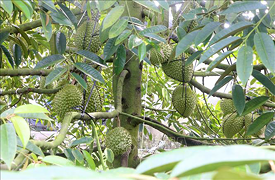
Vietnamese durian continues to set new export milestones in 2025, affirming its position as a leading product in the fruit and vegetable sector. Looking ahead to 2026, durian remains a crucial commodity, accounting for a high proportion of total fruit and vegetable export value.
However, behind these impressive figures lies increasingly stringent requirements from import markets, forcing the industry to shift from rapid growth to sustainable development, based on standardized production and transparency in the value chain.
In the agricultural, forestry, and fisheries export landscape for 2025, fruits and vegetables continue to be a bright spot, with export value reaching US$8.6 billion, an increase of nearly 20% compared to 2024. Durian continues to play a leading role, accounting for approximately US$4 billion. However, alongside this growth are increasingly stringent technical barriers regarding food safety and traceability. This reality highlights the urgent need to raise production standards, improve management, and enhance information transparency if Vietnamese durian is to maintain its market share and achieve sustainable growth in the coming years.
Recognizing this challenge, the Ministry of Agriculture and Environment is developing a traceability system for Vietnamese agricultural products, initially selecting durian as a pilot item. According to Minister of Agriculture and Environment Tran Duc Thang, this system is not merely a technological solution, but also a modern management tool that contributes to preventing and combating trade fraud, counterfeit goods, and substandard products; while simultaneously promoting agricultural production in a transparent, responsible, and sustainable manner.
Currently, the pilot program for durian traceability is in the testing phase, with initial participation from several businesses and localities. Although still in its early stages, this is considered an important step towards gradually forming a complete, transparent data chain connecting the entire process from orchards, harvesting, processing, packaging to export.
Along with traceability requirements, food safety control is becoming the biggest bottleneck for the durian industry. Importing markets are now particularly concerned about pesticide residues and heavy metals, especially cadmium. This is a factor that can directly affect export potential, because durian trees can absorb and accumulate cadmium if the soil, irrigation water, or fertilizers are contaminated.
In light of this risk, experts suggest that regular testing of soil, water, leaves, and fruits is necessary; and that cadmium-risk areas should be mapped to delineate management zones. Controlling heavy metals cannot be done in a stopgap manner, but must be implemented from the planning stage of cultivation areas, the selection of inputs, and continuous monitoring throughout the cultivation process.
Besides cadmium, pests affecting durian trees also directly impact product quality and reputation. Experts recommend increased monitoring of pests regularly and the application of integrated pest management (IPM) measures. Simultaneously, it is necessary to create favorable conditions for natural predators to thrive, prioritizing the use of biological products and combining them with vegetable oils to reduce reliance on chemical pesticides.
Responding to market demands, Mr. Vo Thanh Toan, Deputy Director of Thien Tam Agricultural Products Co., Ltd., stated that the company recognizes that sustainable development must begin in the growing region, considering it the "root" of the durian export value chain. The company doesn't just stop at the purchasing stage; it participates from the very beginning of the production process by coordinating with specialized units to organize technical training, guiding farmers to cultivate according to export standards, controlling production logs, and maintaining the growing region's code.
According to Mr. Nguyen Quang Hieu, Deputy Director of the Department of Crop Production and Plant Protection, in the context of rapidly increasing durian cultivation area and strong export expansion, requirements for food safety, quality, and traceability are no longer recommendations but have become mandatory conditions. Recent experience shows that many durian shipments face risks due to pesticide residues, heavy metals, or a lack of traceability information – systemic issues that cannot be addressed at the end of the supply chain.
According to Mr. Nguyen Quang Hieu, the model of linking businesses, cooperatives, and farmers, combining procurement with technical support, cadmium testing, and electronic traceability, is an inevitable direction. This linkage is not only for product consumption, but more importantly, for controlling quality right from the beginning of the production chain. "If the process is not transparent and the origin cannot be traced, it means losing the market," Mr. Hieu emphasized.
According to Dang Phuc Nguyen, Secretary General of the Viet Nam Fruit and Vegetable Association, durian accounts for 40-45% of Viet Nam's fruit and vegetable export turnover. When the durian supply chain operates with standardized processes, meeting the stringent standards of the international market, it will build trust and enhance the reputation of Vietnamese agricultural products, while simultaneously driving sustainable export growth.
With the synchronized involvement of all links in the production chain, by 2026 Vietnamese durian has the opportunity to reach further heights based on standardized, transparent, and responsible production. Piloting traceability systems, along with standardizing cultivation processes, is key to building sustainable credibility and affirming Viet Nam's position on the global export map.
Source: Tin Tuc News
- USTR Makes Findings and Proposes Action in 60 Section 301 Investigations Relating to Failures to Take Action on Trade in Forced Labor Goods
- [VCCI] The US officially initiates a Section 301 Investigation into Vietnam on Intellectual property
- General Secretary and President To Lam's working visit to three ASEAN countries: Demonstrating the stature of proactive and constructive diplomacy.
- Viet Nam accelerates innovation drive as skilled workforce becomes key to science and technology growth
- The US is increasing controls on AI chip exports