


Most viewed articles


In 2025, Viet Nam's cashew industry achieved a historic feat by surpassing the export mark of $5.4 billion. However, amidst complex geopolitical changes, the association's leaders have issued important warnings for the journey into 2026.
Miracles born from a spirit of overcoming adversity.
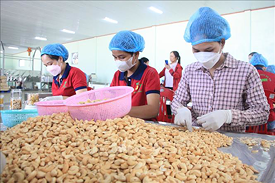
According to the official report from the Viet Nam Cashew Association (VINACAS), 2025 marks a "golden milestone" with cashew kernel export revenue reaching US$5.432 billion. The entire industry processed and exported nearly 798,000 tons of various types of cashew kernels, an increase of 18.09% in value and 4.23% in volume compared to 2024. This is considered a remarkable achievement, because surpassing each billion-dollar milestone usually requires years of effort from the cashew industry, but this year the breakthrough has been exceptionally strong.
Speaking at a recent summary conference, Mr. Pham Van Cong, Chairman of VINACAS, affirmed that this is the result of the dynamism and timely adaptation of the business community in the context of a volatile world. In 2025, the cashew industry will not only face the global economic recession but also have to directly battle the harsh tariff barriers from the US market.
Looking back at 2025, the biggest event was the US tariff policy. On April 2, 2025, the executive order imposing retaliatory tariffs of up to 46% on Vietnamese agricultural products severely disrupted cashew exports to the US market. Between April and August, exports to the US decreased by 30% to 42% each month.
However, thanks to the decisive intervention of the Government , relevant ministries, and the close cooperation of VINACAS throughout the negotiation rounds, this tariff gradually decreased to 20% in July and officially to 0% in November 2025. Although total exports to the US for the whole year still decreased by 29.3%, the removal of the tariff barrier at the last minute protected Viet Nam's second largest cashew market (accounting for 13.88% of the market share).
Amidst difficulties in the US market, businesses have quickly shifted their focus to other regions. China has emerged as the number one market with a turnover of nearly $1 billion ($999,010,015), accounting for 19.64% of the market share and growing by 49.66% in value compared to the previous year.
Notably, the Middle East region has seen a significant rise. The top 20 largest markets now include five countries from this region: the UAE, Saudi Arabia, Iraq, Israel, and Jordan. Total exports to these five countries reached nearly 80,000 tons, accounting for 10% of Viet Nam's total production. This proactive approach has helped the cashew industry fill the shortfall and set new export records.
Despite having just set a record, the head of the industry remained far from complacent. At the conference to implement tasks for 2026, Chairman Pham Van Cong spent most of his time warning about the "undercurrents" of geopolitical tensions.
Mr. Cong emphasized that 2026 will be even more challenging due to global political and economic fluctuations. In particular, the conflict in the Middle East between the US, Israel, and Iran is directly impacting shipping routes and international trade.
Mr. Cong advised: "Businesses should prioritize selling at CIF or CNF prices instead of the traditional FOB price." According to him, in the context of increased payment and transportation risks, proactively controlling the transportation and insurance process (CIF/CNF pricing) will help businesses minimize losses if unforeseen incidents occur during transportation or payment disputes arise.
Breakthrough strategy from the new value chain in 2026
To help businesses respond promptly, Mr. Cong also directed the VINACAS Information Council to change its operating method. Instead of just providing monthly newsletters, the Association will focus on "Breaking News." "We will warn about breaking news online as soon as we receive it from international organizations or markets in Africa and Cambodia so that businesses can react immediately," Mr. Cong said.
Another challenge facing the cashew industry is its dependence on raw supply. In 2025, Viet Nam imported more than 3.12 million tons of raw cashews worth $4.66 billion. Of this, Cambodia supplied nearly 1 million tons, and Ivory Coast more than 780,000 tons.
However, African countries are stepping up protectionist policies for domestic production. Many countries, such as Benin and Burkina Faso, have imposed bans on the export of raw cashew nuts at the beginning of the season or significantly increased export taxes and fees to prioritize their domestic factories. This puts enormous pressure on the input costs of Vietnamese businesses.
The Chairman of VINACAS also expressed concern about the import of low-quality cashew kernels from Africa to Viet Nam for "reprocessing," which not only creates unfair competition but also tarnishes the reputation of the "Vietnamese Cashew" brand - which has been painstakingly built over the past 30 years.
Entering 2026, VINACAS aims to export 800,000 tons of cashew kernels, generating $5 billion in revenue. Although this figure is lower than that of 2025 (due to forecasts of fluctuating cashew kernel prices), production volume is still expected to maintain a slight growth trend.
To achieve this goal, the cashew industry has identified a strategic direction: a strong shift towards processing high value-added products (deep processing) instead of just processing raw cashew kernels. VINACAS has strengthened its Equipment and Technology Club to support businesses in upgrading machinery and bringing to market products that meet the diverse needs of global consumers.
Furthermore, building a strong and reputable team of brokers is also a vital requirement. The association is actively gathering dedicated brokers to jointly shoulder the mission of developing the market in this new phase.
Overcoming a turbulent 2025 with a record-breaking figure of over $5.4 billion is proof of the resilience of Viet Nam's cashew industry. However, Mr. Pham Van Cong, Chairman of VINACAS, affirmed that the journey into 2026 will leave no room for complacency. A shift in mindset, from contract signing and information gathering to a focus on quality and deep processing, will be the "key" for Vietnamese cashews to maintain their central position in the global cashew industry.
With a tradition of over 35 years of formation and development, we believe that the Vietnamese cashew business community will continue to turn challenges into opportunities, firmly steering the cashew industry towards new successes.
Source: Tin Tuc News
- Commission updates product scope and digital tools to support implementation of EU Deforestation Regulation
- Maintaining Viet Nam’s foothold in the Middle Eastern agricultural market
- Creating a more enabling environment for private enterprises
- Standard Chartered raises Viet Nam 2026 GDP growth forecast to 9.5%
- Textile sector to sew loose ends as FTAs kick in