


Most viewed articles


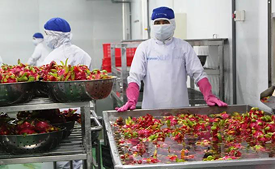
The Ministry of Agriculture and Environment confirmed that Vietnamese dragon fruit is subject to a 30 percent inspection frequency under EU regulations while also urging stronger food safety controls to safeguard export markets.
At noon on March 27, the Ministry of Agriculture and Environment provided further clarification regarding reports that Vietnamese dragon fruit has been subjected to increased inspection levels when exported to the EU market.
According to the Ministry, Vietnamese dragon fruit is currently subject to enhanced controls under Annex II of Regulation (EU) 2019/1793, with an inspection frequency of 30 percent, not 50 percent as previously reported by some sources. Several other products are also under heightened control, including chili peppers at 50 percent, okra at 50 percent, and durian at 20 percent. Passion fruit is not currently subject to the EU’ enhanced control measures.
Regarding the report titled “Results of Monitoring and Control of Pesticide Residues” by France, the Ministry stated that it has not yet received an official version through the SPS inquiry point or via the Viet Nam Trade Office in France. However, according to information published on the Ministry of Industry and Trade’s portal, the report is based on inspection results from 2024.
The Ministry noted that immediately after receiving non-compliance notifications from the EU concerning violations of maximum residue limits, it directed relevant specialized agencies to conduct traceability, investigate causes, and complete corrective reports submitted to the EU’s competent authorities.
Source: SGGP
- USTR Makes Findings and Proposes Action in 60 Section 301 Investigations Relating to Failures to Take Action on Trade in Forced Labor Goods
- [VCCI] The US officially initiates a Section 301 Investigation into Vietnam on Intellectual property
- General Secretary and President To Lam's working visit to three ASEAN countries: Demonstrating the stature of proactive and constructive diplomacy.
- Viet Nam accelerates innovation drive as skilled workforce becomes key to science and technology growth
- The US is increasing controls on AI chip exports